

Cluster Seizures
Cluster seizures and status epilepticus — when it's an emergency
Two types of seizure emergencies that require immediate veterinary care — and how to recognize them.
Not all seizures are the same. A single seizure that lasts under two minutes and resolves fully is frightening but usually manageable. Two specific seizure patterns — cluster seizures and status epilepticus — are medical emergencies. Both conditions are considered veterinary emergencies and may lead to serious complications without prompt treatment. Every pet owner should be able to recognize them.
What are cluster seizures?
Cluster seizures are defined as two or more seizures occurring within a 24-hour period, with the animal regaining consciousness between episodes. While your pet may appear to recover between each seizure, the cumulative neurological and physiological stress is serious. The ACVIM 2024 consensus statement identifies cluster seizures as a common neurological emergency associated with significant morbidity. Cluster seizures differ from status epilepticus in that the animal does regain consciousness between episodes — but they still require urgent veterinary attention.
What is status epilepticus?
Status epilepticus (SE) is a single seizure that continues without stopping for approximately five minutes or more, or a series of seizures between which the animal does not regain normal consciousness. It is one of the most serious neurological emergencies in veterinary medicine. Status epilepticus is considered a life-threatening neurological emergency. According to the 2024 ACVIM Consensus Statement, published veterinary studies report substantial mortality risk associated with status epilepticus without rapid treatment.
- A seizure lasts approximately 5 minutes or longer without stopping
- Your pet has two or more seizures within 24 hours
- Your pet does not regain normal consciousness between seizures
- Your pet's body temperature appears elevated after seizures (panting heavily, hot to touch)
- Your pet is showing signs of breathing difficulty
Why time matters so much
Prolonged seizure activity causes a cascade of physiological problems — elevated body temperature, low blood oxygen, low blood sugar, and direct neuronal damage. The ACVIM consensus guidelines emphasize that treatment must begin early and rapidly, using a staged approach. The longer a seizure emergency goes untreated, the more difficult it becomes to stop and the higher the risk of serious complications.
Ask your veterinarian specifically about cluster seizures and status epilepticus at your next appointment — before an emergency happens. Ask whether a home rescue medication (such as diazepam) is appropriate for your pet, and under what circumstances to use it. Having a plan in place before an emergency significantly improves outcomes.
- Charalambous M, Muñana K, Patterson EE, Platt SR, Volk HA. ACVIM Consensus Statement on the management of status epilepticus and cluster seizures in dogs and cats. Journal of Veterinary Internal Medicine. 2024;38(1):19–40. doi.org/10.1111/jvim.16928
- Tästensen C, et al. Prevalence of nonconvulsive seizures and nonconvulsive status epilepticus in dogs and cats with a history of cluster seizures. Journal of Veterinary Internal Medicine. 2024;38(1):41–50. doi.org/10.1111/jvim.16953
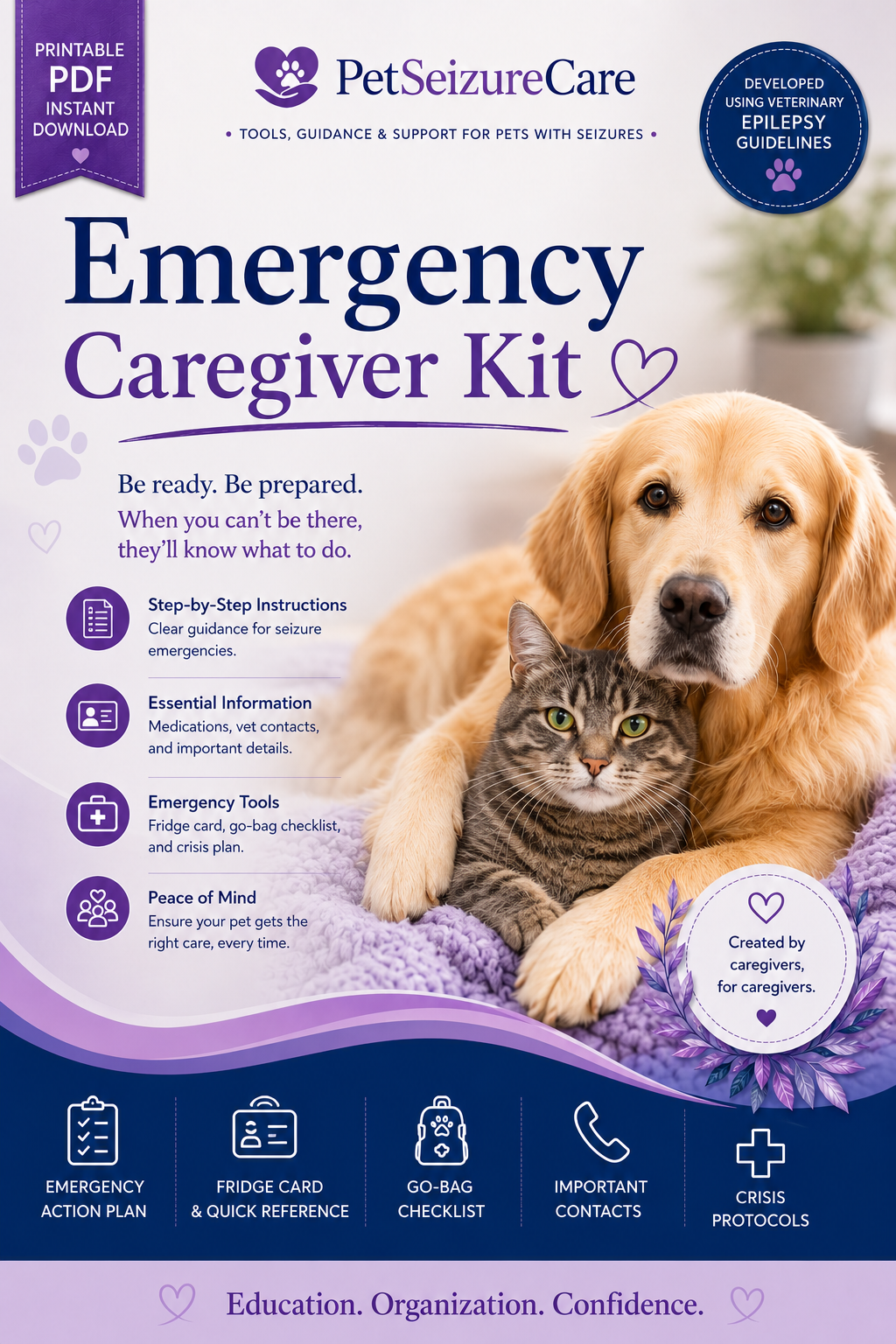
Decide before, not during
Have the plan ready before the emergency.
As this guide stresses, outcomes improve when there's a plan in place before a cluster or status emergency — including knowing when to act and what your vet advised about rescue medication. The Emergency Caregiver Kit gives you a structured place to write all of that down ahead of time, so in the moment you're following a plan instead of trying to think clearly under panic.
Explore the Emergency Caregiver Kit →Help advance pet seizure research
Your tracking data could contribute to better outcomes for every pet with epilepsy.